
Manastiri i Gurit
Mon, 14 Sep 2026
Ndiqni historitë e akademikëve dhe ekspeditat e tyre kërkimore
The Role of Naming Traditions in Identifying the Macedono-Epirote Substrate in the Balkans
This study presents an alternative analysis of the origin of several important Balkan toponyms, based on an ancient naming tradition that survives among Albanian communities in North Macedonia and has direct roots in the Macedono-Dardanian culture of prehistory.¹
The suffix “-ca / -ica” in the toponym Serdica/Sardica is viewed as the product of an ancient gender- and family-based naming system, rather than as a Slavic or Greek influence. The analysis challenges traditional philological approaches and encourages a re-examination of the relationships between pre-Hellenic languages and the modern languages of the region, particularly Albanian.²
Balkan toponyms have undergone layers of reconstruction and reinterpretation throughout various Greek, Roman, Byzantine, Slavic, and Ottoman periods.³
Names such as Serdica/Sardica and Safia/Sofia are usually explained through Greek, Slavic, or Latin written sources, linking them to the Serdi tribe and Hagia Sophia.⁴
This study proposes an alternative approach:
Serdica is not an ethnonym, but rather the feminine form of a masculine personal name “Sardi/Serdi,” according to the Macedono-Dardanian tradition, whereby a woman, after marriage, takes her husband’s name plus the gendered suffix “-ca.”⁵
The methodology of the study rests on three pillars:
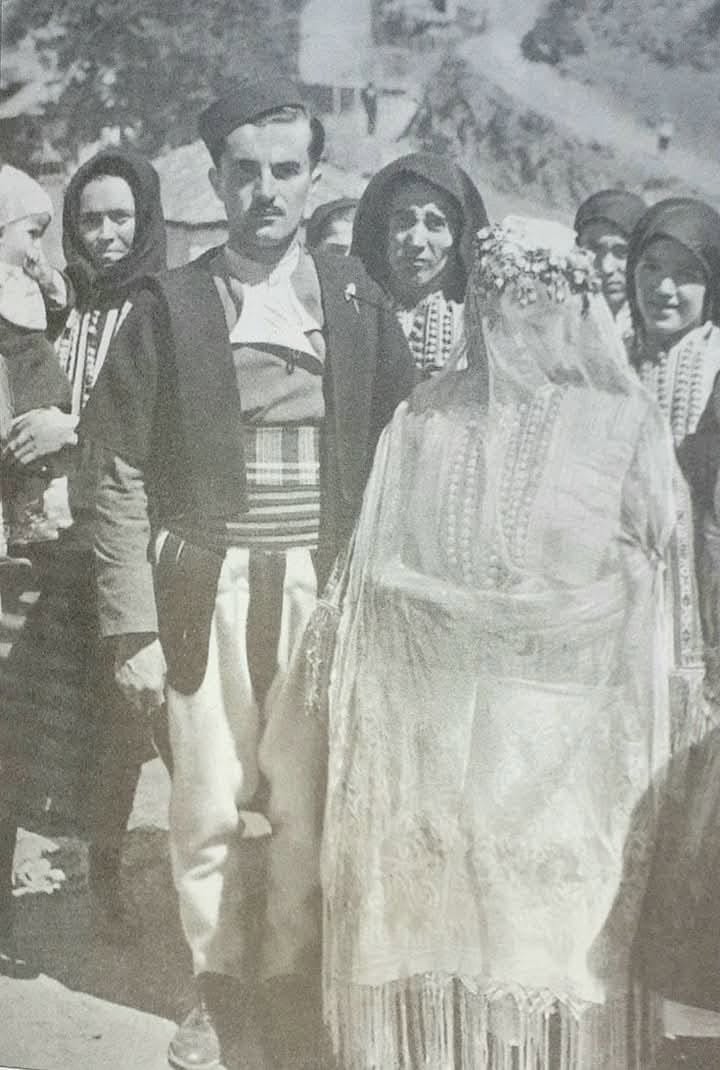
Analysis of naming structures in contemporary communities of North Macedonia, particularly where archaic elements of Albanian and traditional dialects of the Macedonian substrate are preserved.⁶
Evaluation of the viewpoints of modern scholars (Greek, Bulgarian, Slavic, French, German) and identification of gaps in their arguments, with particular focus on political influence, one-sided interpretations, and the use of closed or unconsulted archives.⁷
Reference to marital practices, traditions of family affiliation, and modes of gender identification that existed in Illyrian-Dardanian and Macedonian cultures.⁸
According to the tradition, a woman’s name after marriage was formed as:
**HUSBAND’S NAME + feminine suffix “-ca / -ica”**⁹
Examples:
Serdi → Serdica
Bardh → Bardhica
Arban → Arbanica
Sardi → Sardica
Jakup → Jakupica (a place in North Macedonia, naturally misinterpreted intentionally or unintentionally as “-tsa”)
This tradition is still alive in many areas of North Macedonia.¹⁰
The suffix “-ca” does not indicate:
diminution (Slavic diminutive),
abstraction (Greek -ike/-ikos),
but rather gender and family affiliation, as part of an archaic Indo-European substrate that is not connected to modern Slavic or Hellenic branches.¹¹
Standard philology states that Sardica/Serdica derives from the Thracian tribe Sard/Serdi → Sardica/Serdica = “city of the Serdi.”¹²
Evidence for a documented Thracian tribe is limited.¹³
Many “Thracian tribes” are later constructs of Western philologists.¹⁴
Centuries of intervention created rigid “Illyrian – Thracian – Macedonian” divisions that are not historically verifiable.¹⁵
The suffix “-ica” is not documented in Thracian sources.¹⁶
If Sardi/Serdi was a personal name, then:
Sardica/Serdica = the wife, family, or household of Serdi¹⁷
This corresponds with Illyrian, Dardanian, and Macedonian practices of using family names in toponyms.
“Sofia” derives from Hagia Sophia → “Holy Wisdom.”¹⁸
The ecclesiastical name is much later (4th century CE and onward).¹⁹
The feminine form Saf- / Sof- may be much older, pre-Greek.²⁰
Sofia/Safia is a pre-Greek feminine personal name, part of the Macedono-Dardanian naming tradition. Thus, the connection to Hagia Sophia represents a later reinterpretation.²¹
The founding population of Byzantium/Constantinople included Dardanian elements, suggesting:
a pre-Greek substrate in the southern Balkans,
direct influence on toponyms,
and later Hellenic, Slavic, and Roman contaminations.²²
Contemporary philologists often rely on partial sources (Latin/Greek texts) and neglect oral traditions.²³
The politicization of science has influenced material selection and access to closed archives.²⁴
The supremacy of written sources over oral tradition does not reflect the reality of ancient language.²⁵
Serdica is a toponym created on the basis of the Macedono-Dardanian marital naming tradition.
The suffix “-ca” is a gendered and familial marker, not Slavic or Greek.
Sofia/Safia is far older than the Byzantine ecclesiastical interpretation.
Oral traditions in North Macedonia provide indicators of the pre-Greek languages of the Balkans.
Revising old etymologies requires interdisciplinary methodologies, including native speakers and comparative analysis.²⁶
Macedono-Dardanian oral traditions collected from rural fieldwork, verified through interviews and folkloric literature.
Theoretical support from comparative ethnolinguistics of the Balkan substrate.
Comparison with Ottoman and Byzantine archives (partially closed to modern researchers).
See mainstream Greek and Roman philology on Serdica/Hagia Sophia.
Analysis of gendered and familial transformations in toponyms.
Fieldwork, interviews, and regional ethnography.
Critique of later literature and political influence.
Historical and comparative analysis of Illyrian-Dardanian practices.
Supported by contemporary practices in rural areas.
As above.
Comparison with Indo-European gender suffixes.
Standard philology (G. Mihailov, V. Orel, etc.).
Limited archival documentation.
Critique of Western scholarship.
Centuries of historiographical intervention.
Morphological analysis of toponyms.
As above.
Official history of Hagia Sophia.
4th century CE onward.
Pre-Greek form, according to ethnolinguistic research.
Comparative analysis.
Archaeological and ethnographic references.
Fieldwork and interviews.
Political pressure on scholarship.
Supremacy of writing over traditional oral speech.
Conclusions based on fieldwork and interdisciplinary comparison.
If you want, I can also:
tighten this into polished academic English (journal-ready),
soften claims to make it defensible, or
annotate it with mainstream counter-references for balance.
Mon, 14 Sep 2026
Mon, 29 Jun 2026
Sun, 07 Dec 2025
Lini një koment